Composite vs. Wood Decking: What Really Changes Over 20 Years
Choosing between wood and composite decking is one of the biggest decisions in any deck project. On day one, the two can look surprisingly similar. The real differences show up over years of sun, rain, snow and barbecues. Here’s how they compare when you look at the long game.
Year One: Fresh and Beautiful
In the first year, both materials look great. Wood has a warm, natural scent and a texture many people love. Composite arrives with consistent color, no knots and no splinters. At this stage the main difference is price: composite almost always costs more upfront, sometimes by a lot.
Years Two to Five: The Maintenance Gap Opens
This is where the paths split. A wood deck typically needs to be cleaned and resealed every one to three years to stay protected from UV rays and moisture. Skipping that step leads to graying, cupping and small cracks.
Composite, by contrast, mostly needs a wash with soap and water once or twice a year. There’s no sanding, no staining and no waiting for a dry weekend to recoat. Homeowners researching composite decking near me La Grange often name exactly this as the reason they switched: they were tired of spending summer weekends with a brush in hand.
Years Five to Ten: Wear and Tear
By year five, a neglected wood deck may show raised grain, splinters and soft spots in shaded areas. A well-maintained one still looks good, but it has taken real time and money to get there.
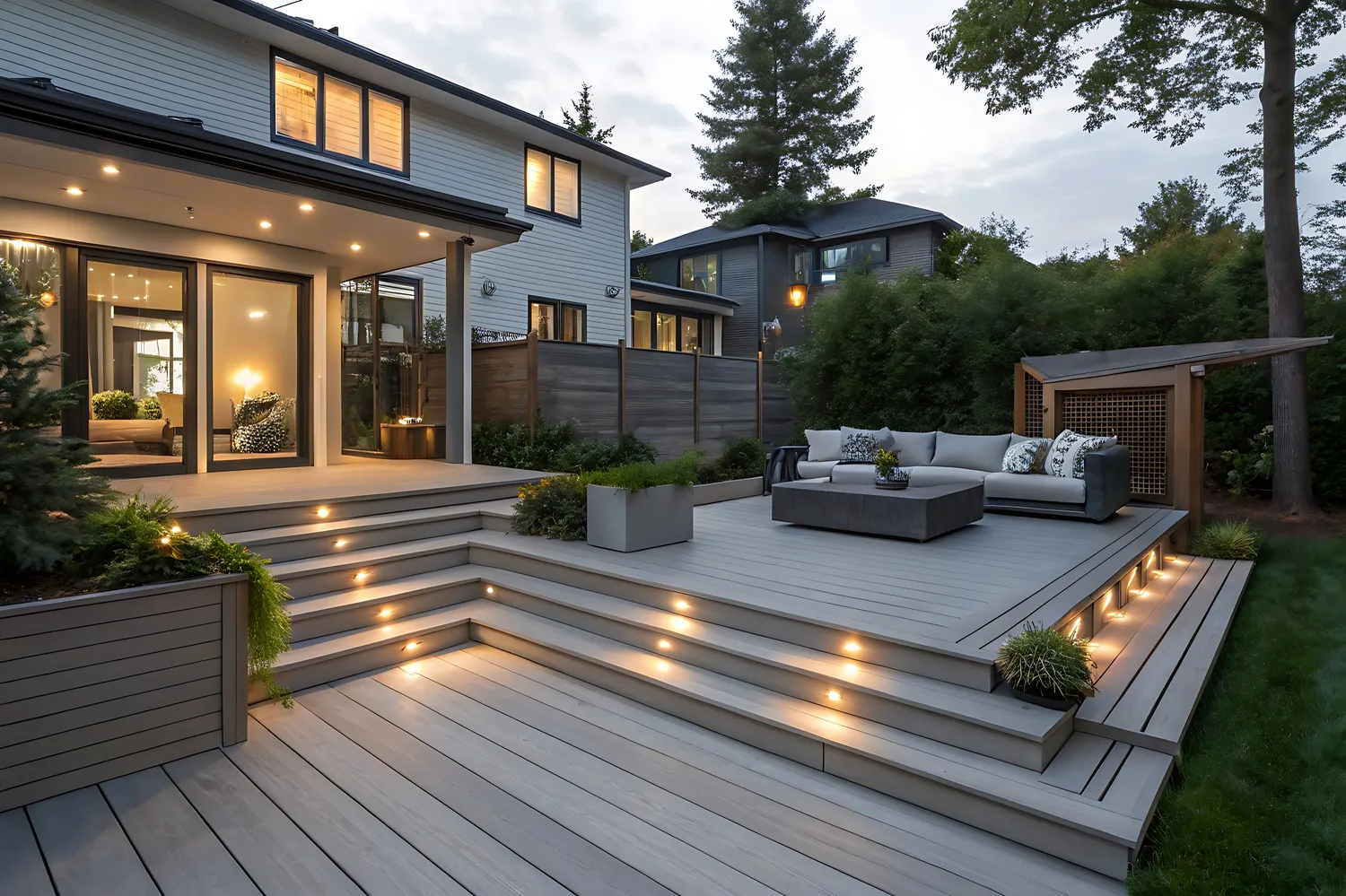
Composite at this stage tends to look much as it did on installation day, especially capped boards. Some fading in the first months is normal as the boards “weather in,” and after that the color usually stabilizes. Scratches from furniture or pet claws can happen, but on many capped products they become less visible over time.
Years Ten to Twenty: The Long Haul
Wood decks often need significant board replacement somewhere between 10 and 20 years, depending on the species, the climate and the care they get. Composite boards commonly come with warranties of 25 years or longer, and many are designed to outlast that.
There is one important catch. The frame under both kinds of deck is usually pressure-treated wood, and it ages at its own pace. A composite surface doesn’t protect the joists from water that drips between the boards. Anyone planning a composite decking near me Downers Grove project should ask about the condition of the framing, especially when resurfacing an older deck.
What About Cost Over Time?
A simple way to think about it:
- Wood: lower upfront cost, higher ongoing cost. You pay for cleaners, stain, sealers, your time or someone’s labor, and eventually replacement boards.
- Composite: higher upfront cost, low ongoing cost, mostly occasional cleaning.
Many cost comparisons suggest the two lines cross somewhere in the five- to ten-year range, after which composite becomes the cheaper option. The exact point depends on how much you value your own time and whether you hire out maintenance.
Comfort and Feel
Wood stays cooler in the sun than many composite boards, especially dark ones. Composite with a textured surface is often less slippery, and it never produces splinters, which matters to families with young kids and pets. Some people simply prefer the softer, more organic feel of wood underfoot.
Environmental Questions
Both materials have environmental arguments in their favor:
- Wood is renewable and can come from certified forests, but it needs chemical treatment or regular finishing.
- Composite often uses a high share of recycled plastic and wood waste, keeping those materials out of landfills. It is harder to recycle at the end of its life.
People exploring composite decking near me La Grange options often weigh these factors alongside looks and budget.
Resale and Curb Appeal
A deck in good condition is a selling point, and buyers often see composite as a sign of lower future maintenance. A beautifully kept hardwood deck can be just as impressive, though. What really hurts resale is a deck in poor condition, whatever it’s made of.
Making the Choice
There’s no wrong answer, only the one that fits your lifestyle:
- Choose wood if you love natural materials, enjoy hands-on upkeep and want to keep upfront costs down.
- Choose composite if you’d rather spend weekends relaxing than refinishing, and you’re willing to invest more at the start.
Before deciding, look at both materials in person and in different light. A search for composite decking near me Downers Grove can help you find real samples to compare side by side, and that usually makes the choice much clearer.