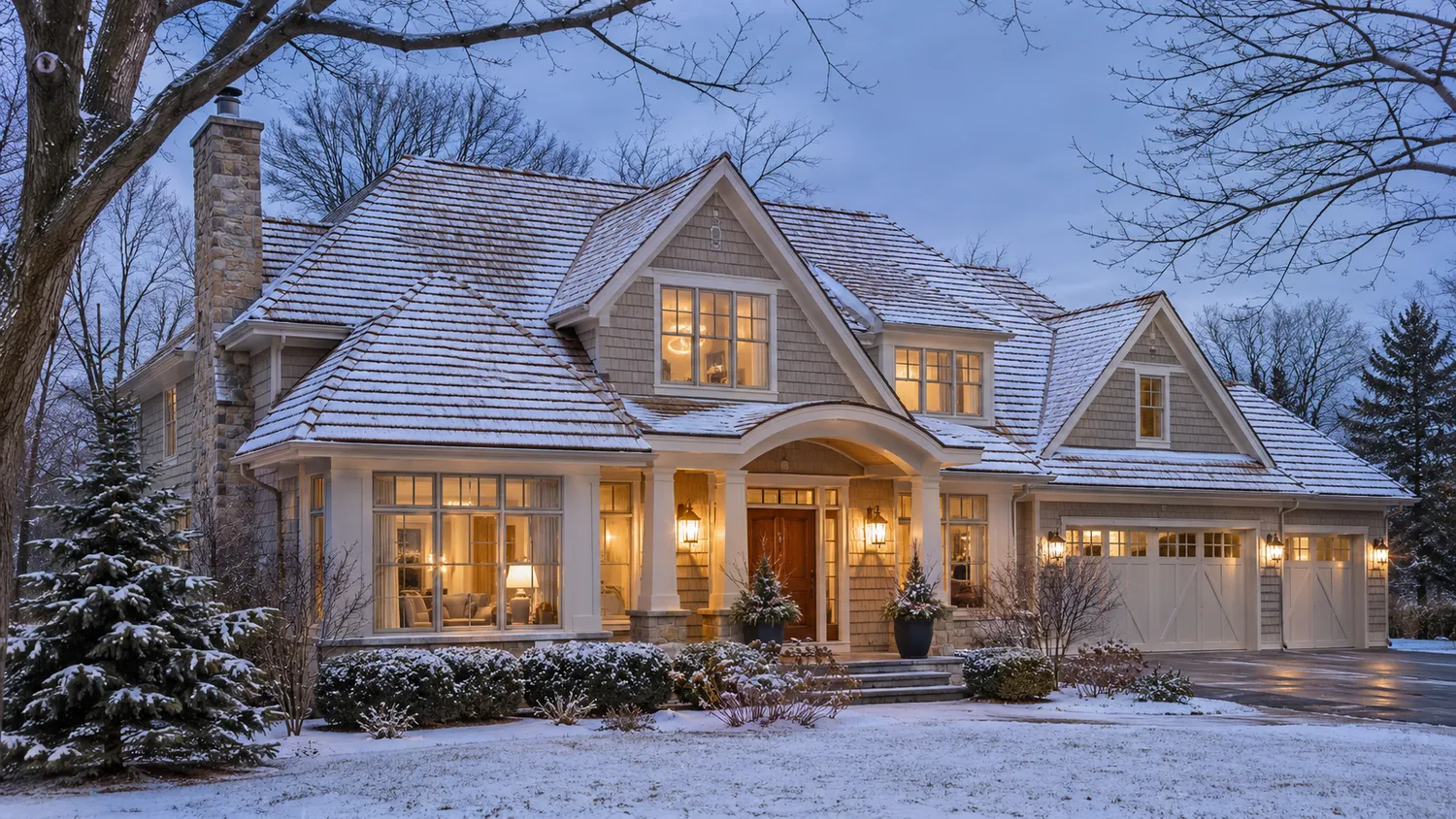
Shakes vs. Shingles: The Old Craft Hidden in Two Simple Words
Ask ten people to describe a wood roof and you’ll probably hear “shake” and “shingle” used as if they mean the same thing. They don’t. The difference comes down to one simple question: was the wood split or sawn? Behind that question sits a craft that goes back centuries.
Splitting With the Grain
Long before sawmills, every wooden roof covering was made by hand, and the method was splitting. A craftsman would cut a log into short sections, often called bolts, and then use a tool called a froe to split off thin slabs. A froe is an L-shaped tool: a long, dull blade with a wooden handle set at a right angle. The blade was placed on the end of the bolt and struck with a heavy wooden club or mallet. Once the blade bit into the wood, the worker levered the handle to pry the slab apart.
The key to this method is that the wood splits along its natural grain. Instead of cutting across fibers, the froe separates them. The result is a piece with long, unbroken fibers running from top to bottom. That structure helps water flow down the surface instead of soaking in, and it makes the piece less likely to crack. These hand-split pieces were the first shakes, and they covered roofs and walls in colonial America for generations.
Enter the Sawmill
In the nineteenth century, machines designed to saw shingles quickly began to spread. A sawn shingle is cut on both faces, so it has a smooth surface and a precise taper from a thick bottom edge, called the butt, to a thin top. Sawn shingles could be produced in huge numbers and laid in neat, uniform rows. For a time they became the standard wood roof across much of the country. Hand-split shakes stayed popular wherever a rugged look was preferred.
Sawn shingles even developed their own charming vocabulary. In the traditional grading system, 16-inch shingles are often called “Fivex,” 18-inch shingles “Perfections,” and 24-inch shingles “Royals.” Those names still appear in the trade today.
The Modern Family of Shakes
Today’s shakes come in several distinct types, each with its own look:
- Hand-split and resawn shakes are split to create a rough, textured face, then run through a saw diagonally so that one block becomes two tapered pieces. Each piece has one rugged split face that faces the sky and one smooth sawn back that lies against the roof.
- Tapersawn shakes are sawn on both sides like shingles, but they’re thicker. That gives a roof deeper shadow lines and a more substantial, tailored appearance.
- Straight-split shakes are split without being tapered, so they’re the same thickness from top to bottom. They create one of the most rustic, traditional looks available.
A homeowner researching cedar roofing near me Wilmette is likely to run into all three terms. Knowing the difference makes it far easier to picture what a finished roof will look like.
Why Thickness Changes Everything
The most obvious visual difference between shakes and shingles is the shadow line. Shakes are thicker at the butt, so each row casts a deeper shadow on the row below. From the street, a shake roof looks bold and textured. A shingle roof looks finer and more tailored, closer to a woven pattern.
There’s a practical side, too. A roof is never just one layer of wood. Each course overlaps the ones below, and only a portion of each piece, called the exposure, stays visible. At any given point, the roof is two or three layers thick.
The rough faces of shakes don’t lie perfectly flat against each other. For that reason, shakes have traditionally been installed with strips of felt, called interlayment, between courses to help shed wind-driven rain and snow. Smooth sawn shingles fit together more tightly, so the method differs.
A Craft That Never Fully Disappeared
You might expect the froe to be a museum piece by now, but splitting by hand never completely vanished. Restoration projects on historic buildings sometimes still call for hand-split shakes to match the original appearance. The basic principle of following the grain still guides how many shakes are produced.
Walk through older neighborhoods and you’ll start to notice the difference everywhere: the crisp, even lines of sawn shingles on one house, the craggy texture of heavy shakes on the next. Whether you’re simply curious or searching for cedar roofing near me Glenview, the language of wood roofs tells a story of tools, technique and tradition that stretches back hundreds of years.